
Over the last decade, surgical science has seen an impressive shift in how we approach common abdominal procedures. While open surgery has saved countless lives and still has its place, laparoscopy and minimally invasive approaches are rapidly becoming the preferred methods across specialities. From a pulmonologist’s perspective, this transition is not just about smaller scars, it’s about safer recovery, fewer complications, and significantly better postoperative lung health.
In this blog, we’ll walk you through the benefits of minimally invasive surgery, especially laparoscopic procedures, and explain why they matter even if the condition itself isn’t pulmonary.
Understanding the Difference: Open Surgery vs. Laparoscopy
Open surgery, as the name suggests, involves a large incision to access the surgical site directly. Although effective, it exposes large tissue areas, requires longer healing time, and can cause significant pain afterward.
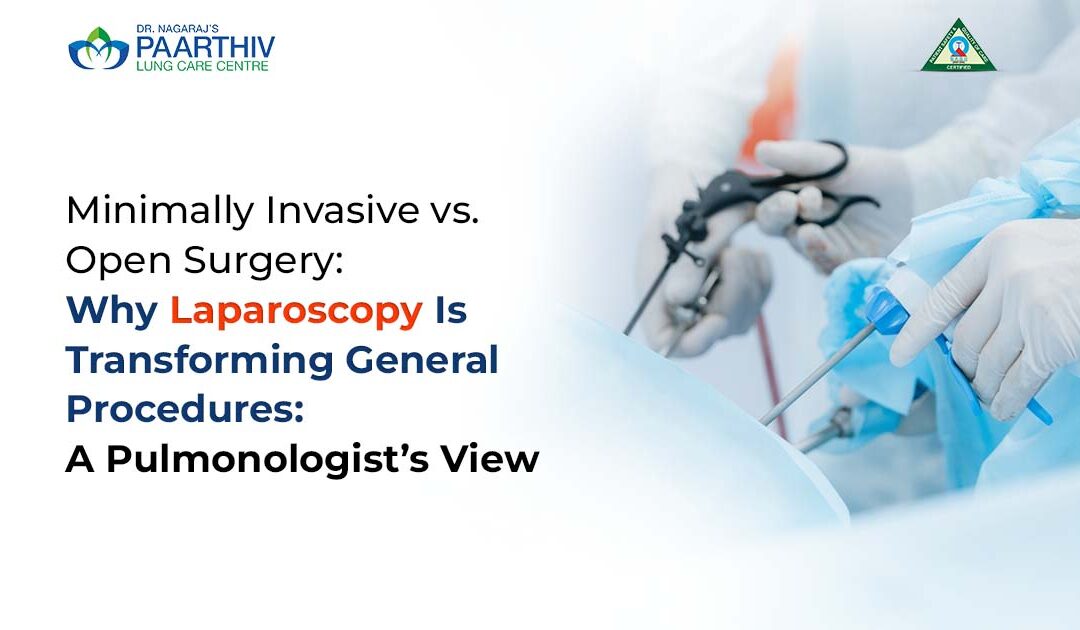
Laparoscopic surgery, on the other hand, uses very small incisions through which a camera and slender instruments are inserted. Surgeons operate by viewing a magnified camera feed, making the procedure extremely precise with minimal disruption to healthy tissues.
This shift isn’t limited to gallbladder removal or appendix surgery, laparoscopy now plays a vital role in abdominal, pelvic, bariatric, and even cancer surgeries.
Why This Matters for Lung Health
Now, you might wonder, what does laparoscopy have to do with breathing?
A lot, in fact. As pulmonologists, we see the after-effects of major abdominal surgery more often than you might imagine. After open surgery, pain, restricted movement, and anesthesia effects frequently lead to atelectasis (collapse of tiny air sacs in the lungs), pneumonia, or prolonged respiratory issues.
Here’s where laparoscopy makes a major difference:
- less postoperative pain
- earlier mobilization
- improved ability to cough and clear secretions
- lower chances of postoperative pneumonia
- reduced need for strong pain medications (which can depress breathing)
Patients breathe better and recover faster, not just in terms of the incision, but in overall bodily function.
Smaller Cuts, Big Advantages
The most noticeable advantage of laparoscopy is minimal incision size. But there’s a long list of medical benefits that go beyond cosmetics:
- Less blood loss
- Lower infection rates
- Reduced hospital stay
- Faster return to normal activity
- Less postoperative hernia risk
- Better cosmetic outcomes
From a respiratory standpoint, a shorter hospital stay also means less risk of hospital-associated infections, including lung complications.
Postoperative Pain and Breathing
Pain after open surgery forces patients to avoid deep breathing, suppress coughing, and remain immobile for longer. All of these can trigger respiratory problems.
Compared to open surgery, laparoscopic procedures cause:
- less suppression of breathing movements
- fewer lung complications
- better oxygenation
- faster return of normal lung volumes
For older adults, people with asthma, COPD, or smokers, this difference is critical.
Recovery and Mobility
Early mobilization is a huge advantage. When a patient is able to walk on day one or day two, their lungs expand better, blood circulation improves, and chances of clot formation decrease.
We often encourage postoperative breathing exercises, but if a patient is in too much pain, these exercises become difficult. Minimally invasive surgery reduces this problem dramatically.
Safer for High-Risk Patients
In patients with respiratory disorders, the risk of open surgery is considerably higher. Laparoscopy reduces the stress on the lungs, so people with:
- COPD
- asthma
- chronic bronchitis
- interstitial lung disease
- a history of smoking
- elderly age
…do significantly better with minimally invasive procedures.
As a pulmonologist, I often recommend that my patients discuss laparoscopic options with the surgical team whenever medically feasible.
What About Complicated Cases?
There are still scenarios where open surgery is necessary, for example:
- emergency trauma
- massive tumors
- anatomical complexities
- extensive adhesions
A skilled surgeon evaluates case-by-case. However, with modern technology and advanced training, laparoscopic surgery is now performable in most routine general procedures.
Will Every Surgery Be Minimally Invasive Soon?
We’re moving in that direction. Robotics, digital visualization, and improved anesthetic techniques continue to push minimally invasive surgery into mainstream use. From a pulmonary health perspective, that is excellent news because better lungs mean better overall health, faster healing, and fewer complications.
Conclusion
While the priority of the surgical team is resolving the underlying problem, my focus is on how the body, and especially the lungs, recover afterward. Minimally invasive and laparoscopic surgeries offer a gentler approach, reduced postoperative respiratory risk, and an overall safer healing experience.
So if you ever need a general procedure, whether gallbladder removal, appendectomy, or hernia repair, ask your surgeon about laparoscopic options. For many individuals, especially those with preexisting lung issues, this one question may significantly improve recovery and long-term health outcomes.